

Discover the truth behind 9 common Sudoku myths about brain games. Learn if Sudoku boosts IQ, prevents dementia, requires math skills, or truly sharpens your mind—backed by science for realistic brain training benefits.
In the world of puzzles, few games have captured global attention quite like Sudoku. This simple yet challenging grid-based puzzle, where players fill in numbers from 1 to 9 without repeating them in any row, column, or subgrid, has become a staple for millions seeking mental stimulation. Originating from logic-based games in the 18th century but popularized in Japan in the 1980s, Sudoku exploded in popularity in the early 2000s, appearing in newspapers, apps, and books everywhere. It’s often hailed as a “brain game” – one of those activities promising to sharpen your mind, boost cognitive function, and even ward off age-related decline.
But amid the hype, numerous misconceptions swirl around Sudoku and similar brain games like crosswords or logic puzzles. People assume these activities are shortcuts to genius-level intelligence or foolproof defenses against dementia. As someone who’s delved into the research, I can tell you that’s not entirely accurate. While Sudoku offers real benefits – such as enhancing focus and logical reasoning – many beliefs about it are rooted in exaggeration or outdated ideas. In this post, we’ll debunk seven common myths about Sudoku as a brain game, drawing on scientific insights to set the record straight.
Why does this matter? Understanding the truth helps you approach Sudoku with realistic expectations, maximizing its advantages without falling for overblown claims. Plus, in an era where mental health and cognitive wellness are top priorities, separating fact from fiction empowers you to make informed choices. Whether you’re a casual player in Patna solving puzzles during evening downtime or a dedicated enthusiast, let’s explore how Sudoku truly impacts your brain. Along the way, we’ll include helpful tables and visuals to break down complex ideas.
Before diving in, here’s a quick overview of Sudoku’s core appeal: It engages the prefrontal cortex, the brain’s hub for decision-making and problem-solving, as shown in functional near-infrared spectroscopy (fNIRS) studies. But does that translate to broader smarts? Read on to find out.
9 Sudoku Myths:
Myth 1: You Need to Be Good at Math to Play Sudoku
One of the most persistent myths is that Sudoku is a math-heavy game, requiring advanced arithmetic skills to succeed. Many newcomers glance at the number-filled grid and assume it’s like solving equations or crunching formulas. This misconception often deters people who aren’t confident in their math abilities, leading them to skip what could be an enjoyable pastime.
In reality, Sudoku has nothing to do with mathematics beyond using numbers as symbols. It’s purely a logic puzzle, akin to arranging shapes or colors in a pattern. The numbers could be replaced with letters, animals, or icons, and the rules would remain the same: no repeats in rows, columns, or 3×3 blocks. As puzzle experts explain, success comes from deductive reasoning – spotting patterns, eliminating possibilities, and making informed placements – not addition, subtraction, or any algebraic operations.
This myth likely stems from the visual similarity to math problems, but historical roots trace Sudoku to Latin squares, a concept from 18th-century Swiss mathematician Leonhard Euler, who used it for combinatorial designs rather than calculations. Modern versions emphasize logic over numeracy, making it accessible to everyone from kids to seniors.
Scientific backing supports this: Studies on puzzle-solving show that logical games activate brain areas for pattern recognition, not numerical processing. For instance, research involving older adults found no correlation between math proficiency and Sudoku performance; instead, it’s tied to working memory and attention. So, if you’ve avoided Sudoku thinking it’s a math test, give it a try – you might surprise yourself with how quickly logic takes over.
To illustrate, consider this comparison table:
| Aspect | Math Problems | Sudoku Puzzles |
|---|---|---|
| Core Skill | Calculation (e.g., sums, products) | Logical deduction |
| Tools Needed | Formulas, calculators | Observation, elimination |
| Goal | Numeric result | Complete grid without repeats |
| Accessibility | Requires math knowledge | Open to all logic thinkers |
By debunking this myth, we open Sudoku to a wider audience, proving it’s a brain game for logical minds, not just number crunchers.
Myth 2: Sudoku Is Mostly About Luck or Guessing
Another common belief is that Sudoku relies on trial-and-error guessing or sheer luck to fill the grid. Players might think that when stuck, randomly plugging in numbers is the way forward, turning the game into a gamble rather than a strategic exercise.
The truth? True Sudoku mastery avoids guessing altogether. Proper puzzles are designed with a unique solution reachable through logic alone. Techniques like “naked singles” (where only one number fits a cell) or “hidden pairs” (eliminating options based on pairs in rows) ensure progress without randomness. Guessing can lead to dead ends, forcing backtracking, which isn’t efficient or enjoyable.
This myth probably arises from poorly designed puzzles or impatient solvers who skip logical steps. But experts in puzzle creation emphasize that well-crafted Sudoku grids have logical paths, rewarding careful analysis over chance. In competitive settings, like Sudoku championships, top players solve complex grids in minutes using pure deduction, proving luck plays no role.
From a cognitive perspective, avoiding guesses trains the brain in systematic thinking. Research on working memory and Sudoku shows that regular players improve in tasks requiring sustained focus and error avoidance, similar to how chess players enhance strategic planning. A study linking Sudoku to cognitive functions in older adults found that logical approaches correlated with better attention spans, underscoring the value of method over luck.
If you’re tempted to guess, try these steps instead:
- Scan for obvious fills.
- Note possible candidates in cells.
- Look for patterns like X-wings or swordfish for advanced eliminations.
Embracing logic over luck transforms Sudoku from a frustrating guesswork session into a satisfying brain workout.
Myth 3: Playing Sudoku Will Make You Smarter Overall
Many enthusiasts claim Sudoku boosts general intelligence, turning average thinkers into Einsteins by enhancing IQ or overall brainpower. Marketing for brain-training apps often amplifies this, suggesting puzzles like Sudoku provide a full cognitive upgrade.
However, evidence indicates Sudoku improves specific skills, not broad intelligence. It hones logical reasoning, pattern recognition, and short-term memory, but these gains don’t necessarily transfer to unrelated tasks like verbal fluency or creative problem-solving. Psychologists call this “near transfer” – getting better at similar activities – versus “far transfer” to everyday life, which lacks strong support.
Studies, including meta-analyses of brain-training programs, reveal mixed results. For example, a large UK study of adults over 50 found frequent puzzle players performed better on memory and reasoning tests, equivalent to brains 8-10 years younger in those areas. Yet, critics note this could be correlation: Smarter people might simply enjoy puzzles more. Randomized trials show improvements in puzzle-specific skills but not global IQ.
Neurologists advise viewing Sudoku as targeted exercise, like weightlifting for arms – it strengthens those “muscles” but won’t make you a marathon runner. To boost overall smarts, combine it with varied activities: reading, physical exercise, or learning new skills.
Here’s a table summarizing transfer effects:
| Skill Improved by Sudoku | Evidence Level | Transfer to Daily Life? |
|---|---|---|
| Logical Reasoning | High | Moderate (e.g., decision-making) |
| Working Memory | Medium | Limited |
| Attention Span | High | Yes (focus in tasks) |
| General IQ | Low | No |
In short, Sudoku sharpens specific tools in your mental toolkit, but it’s not a magic pill for universal genius.
Myth 4: Sudoku Can Prevent Alzheimer’s or Dementia
A widespread myth is that regular Sudoku play acts as a shield against Alzheimer’s disease or other forms of dementia, preserving brain health indefinitely.
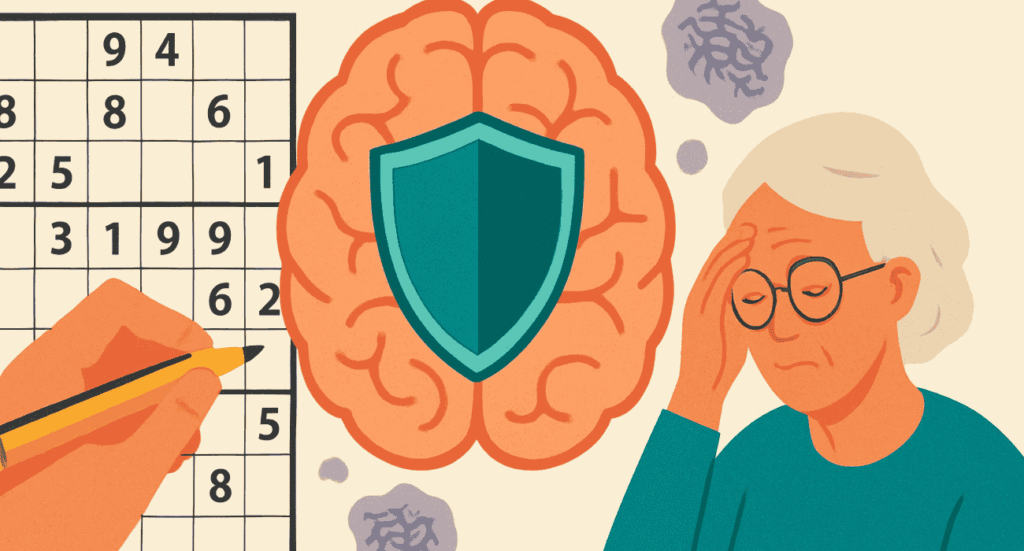
While promising, research doesn’t support prevention claims. Sudoku and similar games may delay symptom onset or slow decline in at-risk individuals, but they don’t stop these conditions. Dementia involves complex factors like genetics, lifestyle, and vascular health; puzzles address only cognitive reserve – the brain’s resilience built through mental activity. For details visit- Cognitive Benefits of Sudoku: Cuts Dementia Risk by 27 %
Clinical trials, such as one using Sudoku training for mild cognitive impairment, show improvements in reaction time and logical reasoning but not disease reversal. A SHARE-based analysis of European seniors linked puzzle-solving to better cognitive function, suggesting it fights decline, yet experts stress it’s part of a broader strategy including exercise and diet.
Neurologists debunk absolute prevention, noting no single activity guarantees immunity. Instead, Sudoku builds neural pathways, potentially offsetting early damage, as seen in fNIRS studies showing prefrontal activation.
For best results, pair Sudoku with:
- Aerobic exercise (30 minutes daily).
- Social interactions.
- Balanced nutrition rich in omega-3s.
This myth highlights hope in brain games, but realistic views prevent disappointment.
Myth 5: Harder Puzzles Are Always Better for Your Brain
It’s tempting to believe that tackling expert-level Sudoku grids provides superior cognitive benefits compared to easier ones, pushing the brain harder for greater gains.
Actually, consistency trumps difficulty. Overly tough puzzles can cause frustration, leading to abandonment, while moderate challenges build skills progressively. Research on brain training emphasizes the “sweet spot” – puzzles that are engaging but achievable – to maximize activation without burnout.
A study on puzzle psychology found that moderate difficulty enhances flow state, boosting dopamine and motivation. Extreme hardness might activate stress responses, hindering learning. For older adults, starting simple and scaling up correlates with sustained memory improvements.
Tips for optimal challenge:
- Beginners: Easy grids to learn basics.
- Intermediates: Medium for technique practice.
- Experts: Hard for refinement, but mix levels.
Variety keeps the brain adaptable, preventing plateauing.
Myth 6: Digital Sudoku Lacks the Benefits of Paper Versions
Some purists argue that app-based or online Sudoku diminishes cognitive perks, lacking the tactile engagement of pen-and-paper.
Both formats offer similar benefits, with digital adding conveniences like hints or timers. Studies on digital vs. analog puzzles show comparable brain activation, though paper might aid fine motor skills. Digital versions often include adaptive difficulty, enhancing personalization.
A review of brain games found no significant difference in cognitive outcomes. Choose based on preference – digital for portability, paper for mindfulness.
Myth 7: Brain Games Like Sudoku Are Just a Waste of Time
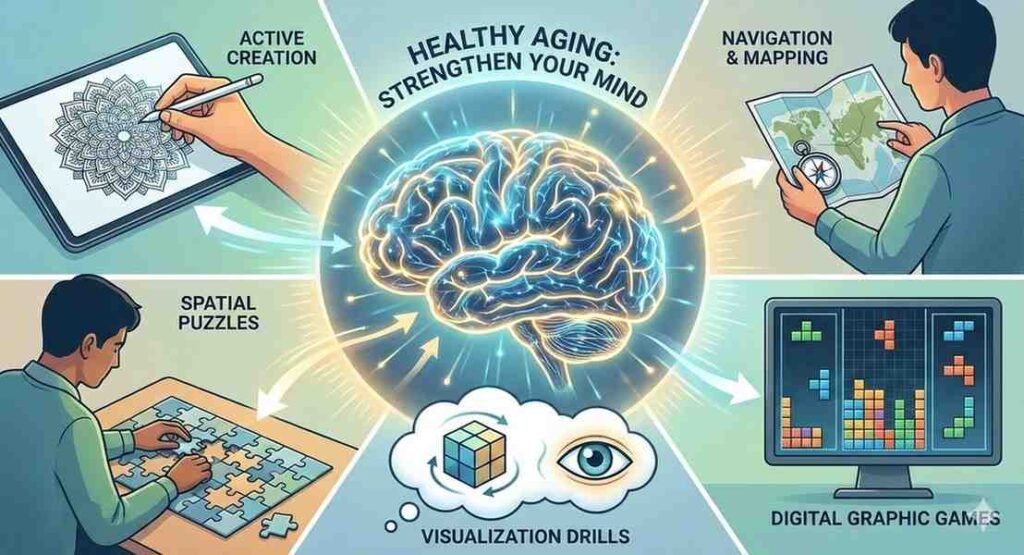
Critics dismiss Sudoku as frivolous entertainment with no real value, better spent on “productive” activities.
Far from wasteful, Sudoku provides measurable benefits: stress reduction, improved focus, and cognitive maintenance. Studies link regular play to better short-term memory and reasoning in seniors, potentially adding mental years. It’s also therapeutic, promoting relaxation akin to meditation.
Beyond cognition, it fosters patience and perseverance. Integrated into routines, it’s a low-cost way to support brain health alongside exercise and socializing.
Myth 8: Most Sudoku Puzzles Are Impossible to Solve Without Guessing or Superhuman Intelligence
A frequent complaint from frustrated players is that many Sudoku puzzles — especially hard or expert ones — are deliberately designed to be unsolvable through normal logic, forcing you to guess or possess genius-level IQ.
In reality, every properly constructed Sudoku puzzle has exactly one unique solution that can be reached through logical deduction alone. No guessing is ever required. What feels “impossible” is usually a lack of familiarity with intermediate and advanced techniques (like X-Wings, Unique Rectangles, or Coloring) covered in our expert techniques guide.
This myth persists because poorly designed or copied puzzles sometimes have multiple solutions or ambiguities, and because beginners hit walls on tougher grids without the right tools or systematic approach. Championship solvers routinely crack extremely difficult puzzles in minutes using pure logic, proving that persistence and technique — not innate brilliance — make the difference.
Cognitive research supports this: Studies on puzzle-solving show that performance improves dramatically with practice and technique knowledge, not raw intelligence. Anyone can learn to solve even the toughest grids.
Quick tips to overcome this feeling:
- Use pencil marks consistently.
- Follow a systematic scan order.
- Practice on graded puzzles that gradually increase in difficulty.
- Leverage solvers like sudoku.coach for guided explanations when truly stuck.
Myth 9: You Need to Solve Sudoku Puzzles in One Sitting to Get Any Benefit
Many believe that stopping midway or taking breaks “ruins” the puzzle and eliminates any cognitive gains, so they push through even when fatigued or frustrated.
The truth is that Sudoku benefits come from regular, consistent practice rather than marathon sessions. Short, focused sessions (15–30 minutes) are often more effective for building skills, reducing stress, and improving focus than forcing one long sitting. Taking breaks actually helps your brain consolidate patterns subconsciously — a phenomenon known as the “incubation effect” in problem-solving studies.
This myth likely comes from competitive timing pressure or the satisfying “flow” of completing a grid uninterrupted. But for brain health and enjoyment, flexibility wins. Many top players solve multiple short puzzles daily instead of one long session.
Practical advice:
- Save your progress (most apps and printable puzzles allow this).
- Return with fresh eyes — you’ll often spot the solution quickly.
- Mix difficulties and formats (paper vs. digital) to keep it engaging.
In conclusion, Sudoku myths often overpromise or underestimate its role. By understanding these, you can enjoy it as a fun, beneficial tool. Aim for 15-30 minutes daily, vary puzzles, and combine with holistic habits for optimal results. Whether in Bihar or beyond, Sudoku remains a timeless brain booster – just not a miracle cure.
FAQs On Sudoku Myths
Q1- Is Sudoku really a math game?
Ans- No, Sudoku is fundamentally a logic puzzle that uses numbers as symbols. It focuses on pattern recognition and deduction, not arithmetic, making it accessible to anyone regardless of math skills.
Q2- Does guessing play a big role in solving Sudoku?
Ans- Not at all; well-designed Sudoku puzzles can be solved entirely through logical reasoning without any guessing. Techniques like elimination and spotting patterns ensure a unique solution based on deduction.
Q3- Can playing Sudoku increase my overall intelligence?
Ans- Sudoku enhances specific skills like logical reasoning and working memory, but it doesn’t boost general IQ or intelligence across all areas. Gains are mostly in puzzle-related tasks, not broad cognitive upgrades.
Q4- Will Sudoku prevent Alzheimer’s or dementia?
Ans- While Sudoku may help delay symptoms or build cognitive reserve, it doesn’t prevent these conditions outright. It’s part of a healthy lifestyle but can’t stop underlying factors like genetics.
Q5- Are harder Sudoku puzzles better for brain training?
Ans- Not necessarily; moderate challenges that match your skill level promote better engagement and benefits without causing frustration. Consistency and variety are more important than extreme difficulty.
Q6- Is digital Sudoku less effective than paper versions?
Ans- Both formats provide similar cognitive benefits, with digital options offering added features like adaptive difficulty. The choice depends on personal preference, as brain activation is comparable.
Q7- Are brain games like Sudoku a waste of time?
Ans- Far from it; Sudoku supports focus, stress reduction, and cognitive maintenance, especially for older adults. It’s a valuable, low-cost activity when combined with other healthy habits.
Q8- Does Sudoku improve memory?
Ans- Yes, it strengthens working memory by requiring you to hold and manipulate information, such as possible numbers in cells. Regular play can lead to better short-term recall in similar tasks.
Q9- Can Sudoku keep my brain young?
Ans- Studies suggest frequent puzzle-solving like Sudoku correlates with brain function equivalent to 8-10 years younger in areas like reasoning and attention, though this is associative, not causal.
Q10- Is Sudoku good for concentration?
Ans- Absolutely; solving puzzles demands sustained attention and focus, helping to improve concentration over time, similar to how it trains logical thinking.
Q11- Do I need to be smart to start Sudoku?
Ans- No prior intelligence level is required; beginners can start with easy puzzles and build skills through practice, as it’s about learning logic patterns rather than innate smarts.
Q12- How often should I play Sudoku for brain benefits?
Ans- Aim for 15-30 minutes daily or a few times a week for optimal results, focusing on enjoyment to avoid burnout while combining it with physical activity and social interactions.

M K Singh is a Sudoku enthusiast and content contributor at Sudoku Times. With over 14 years of experience in a government institution, he brings a disciplined and analytical mindset to problem-solving. A dedicated Sudoku lover for more than 17 years, he enjoys tackling puzzles of all difficulty levels and exploring advanced techniques. Through his writing, M K aims to share practical tips, strategies and insights that help fellow enthusiasts improve their skills and enjoy the game even more.