


Looking for the top 10 Sudoku books in 2026? The right pick depends on skill level: a clear beginner guide, a large-print daily book, or a genuinely hard collection from Nikoli or Frank Longo. This list of the top 10 Sudoku books ranks each title by who it is for, how many puzzles you get, and whether the difficulty label is honest. You will get puzzle counts, who each book is for, what to skip, and a comparison table you can use before you buy.
Top 10 Sudoku books in 2026 depends on the solver, not the year on the cover. Beginners need clear rules and finishable grids. Seniors need large print and one puzzle per page. Daily solvers need volume and paper that can take an eraser.
Paper still wins when you want focus. No ads, no timer unless you add one, and enough space to pencil-mark candidates. Apps are useful for extra grids and a hint. They are a poor replacement for a book you can leave on the table and return to tomorrow.
Typical prices still land around $8–$16 for a paperback and a bit more for spiral-bound or hardcover gift editions. That is enough of a range to buy for skill level instead of buying ten books at once.
Why people still buy Sudoku books instead of only using apps?
Sudoku is popular because the rules fit on an index card and the difficulty can scale for decades. A book earns its keep when it does one of four things well:
- Teaches the next technique, not just the rules
- Stays readable after 20 minutes of candidate marks
- Uses a difficulty ladder you can trust
- Gives you enough puzzles that you are not shopping again next week
What a book cannot honestly promise: a fixed drop in anxiety, a set memory-percentage gain, or a medical delay of cognitive decline. Puzzle-solving is focused downtime. That is the real benefit. Treat wellness claims on covers as marketing.
Variants such as Killer, diagonal, thermo and Samurai are fun after classic 9×9 is automatic. They are a weak first purchase. Most people who abandon a Sudoku book bought one that was too hard, too cramped, or both.
Comparison Table: Top 10 Sudoku Books at a Glance
| Book | Best for | Difficulty | Puzzles | Why it makes the list |
|---|---|---|---|---|
| Sudoku for Dummies | New solvers | Easy–medium | ~240 | Rules + techniques + graded puzzles |
| Will Shortz Easy Sudoku | Confidence building | Easy | 200 | Clean grids, generous givens |
| The Art of Sudoku (Thomas Snyder) | Learning strategy | Easy–hard | 80+ | Techniques taught through crafted examples |
| Funster / Timmerman 1,000+ | Daily volume | Easy–hard | 1,000+ | Cheap months of practice |
| Parragon Big Book of Sudoku | Mixed household | Easy–hard | 500+ | Spiral binding, strong reviews, value |
| Brain Games / Chartwell large print | Seniors, low vision | Easy–mixed | 150–300 | Bigger type, often one puzzle per page |
| Mensa Guide to Solving Sudoku | Intermediate jump | Medium–hard | Hundreds + lessons | Full technique toolkit |
| Nikoli Genius-Level Sudoku | Experts | Expert–extreme | 300+ | Handcrafted Japanese puzzles |
| Longo Beyond Black Belt Sudoku | Die-hards | Extreme | ~100–200 | Genuinely brutal, not “hard” marketing |
| Will Shortz hard collections | Serious daily solvers | Hard | 200–300 | Reliable difficulty, portable |
This table helps you pick based on needs—scan for your level.
What actually matters when you buy in 2026
| What to look for | What it means in a real book | Who it helps |
|---|---|---|
| Print and grid size | Bold digits and cells big enough for pencil marks; one or two puzzles per page | Seniors, anyone who notes candidates |
| Honest difficulty | Easy should fall to singles and scanning; hard should need pairs, fish, or wings | Every buyer |
| Binding | Spiral or lay-flat beats a paperback that snaps shut | Daily solvers |
| Editor or publisher | Shortz, Nikoli, Longo, Snyder, and a few large-print houses are more consistent than a new “2026 edition” logo | People buying a second or third book |
| Solutions | In the back, not showing through the page | Everyone |
| Puzzle count | 200–300 for a normal book; 500–1,000 for volume; under 150 is fine for a technique guide | Match count to your goal, not the cover shout |
Ignore trend copy about AI fog-of-war grids, TikTok challenges, and eco-paper as a ranking factor. Those rarely decide whether you finish the book. Layout, difficulty, and print size do.
If you want the short path through the list: start with Sudoku for Dummies or a Will Shortz Easy collection, move to a large-print or 500+ mixed book for daily use, then use the Mensa Guide before you touch Nikoli Genius-Level or Longo’s Black Belt books.
Best Sudoku books for beginners
1. Sudoku for Dummies — Andrew Heron and Edmund James
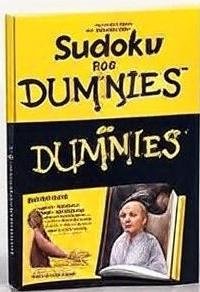
This is still the right first book if you want explanation, not just a stack of grids.
You get the rules in plain language, then the early techniques that actually matter: scanning, naked singles, hidden singles, and locked candidates. Puzzles are graded, so you are not dumped into a “medium” that secretly needs an X-Wing.
Get this if: you have never finished a 9×9, or you bounce off newspaper puzzles.
Skip if: you already solve medium puzzles without notes and just want volume.
2. Will Shortz Presents Easy Sudoku
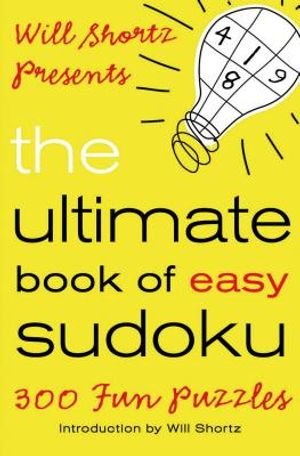
Will Shortz’s name is on more Sudoku books than anyone else’s for a reason: consistent editing and clean presentation.
The easy volumes use enough given digits that a new solver can finish with singles and careful scanning. That sounds basic. It is also how people stay with the hobby instead of quitting on page 4.
Get this if: you want practice, not a textbook.
Skip if: you need diagrams that teach named techniques.
3. The Art of Sudoku — Thomas Snyder
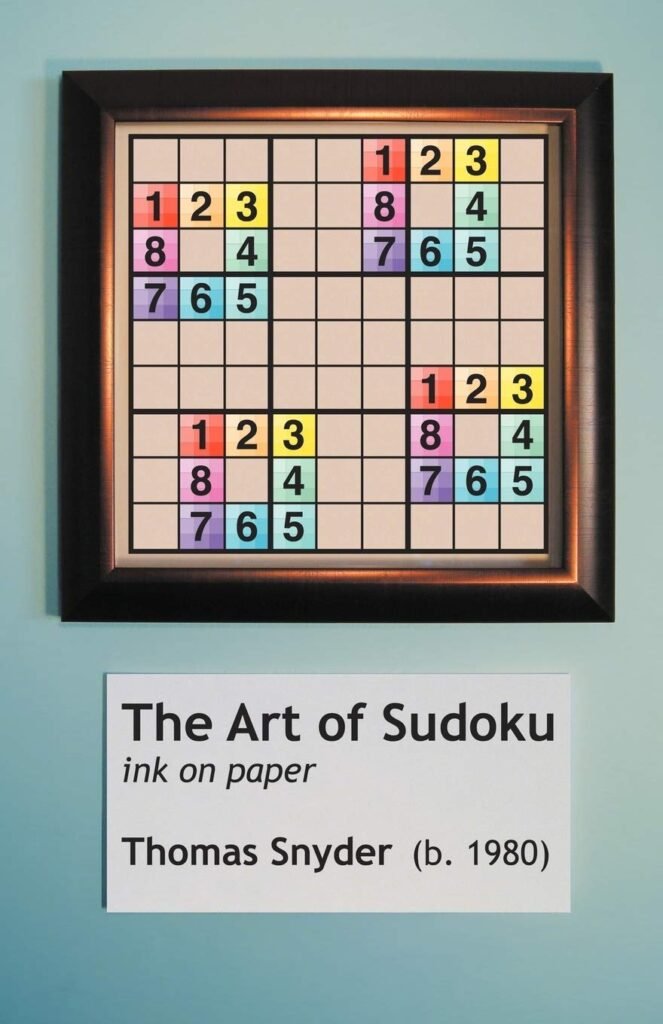
Snyder is a three-time World Sudoku Champion. This is the book for people who do not just want to fill cells; they want to see why a move works.
Puzzle count is lower than the cheap 1,000-packs. Quality is higher. Each section introduces a technique, shows it, then tests it. If your goal is to graduate from easy to hard without guessing, this is the efficient path.
Get this if: apps feel random and you want a teacher.
Skip if: you only want a book for the plane.
Best large print and high-volume books
4. Brain Games or Chartwell large-print Sudoku
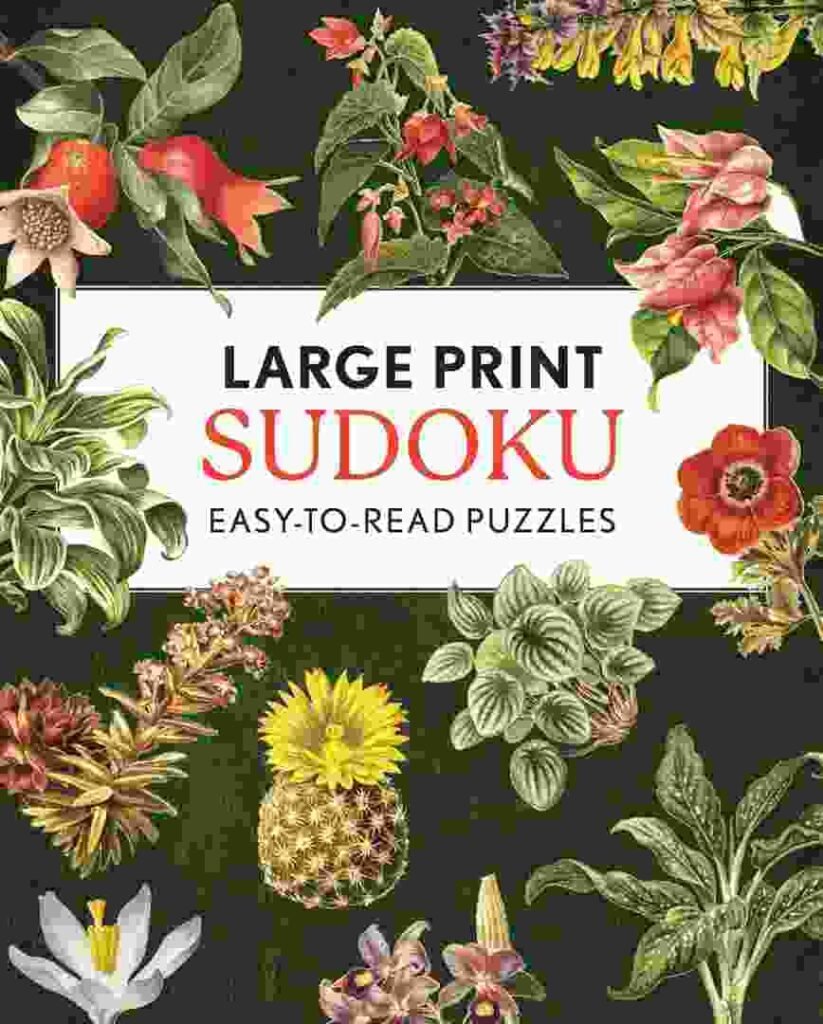
Search “large print Sudoku” and you will see hundreds of nearly identical KDP covers. The useful filter is physical:
- one puzzle per page, or two at most
- spiral or lay-flat binding
- numbers thick enough to read in indoor light
- solutions in the back, not printed through the page
Brain Games (Publications International) and Chartwell’s large-print editions are the safer mass-market versions of that idea. They are built for seniors and anyone tired of newspaper-sized grids.
Get this if: eyestrain is the real problem, not difficulty.
Skip if: you want expert-level logic.
5. Funster 1,000+ Sudoku / Charles Timmerman collections
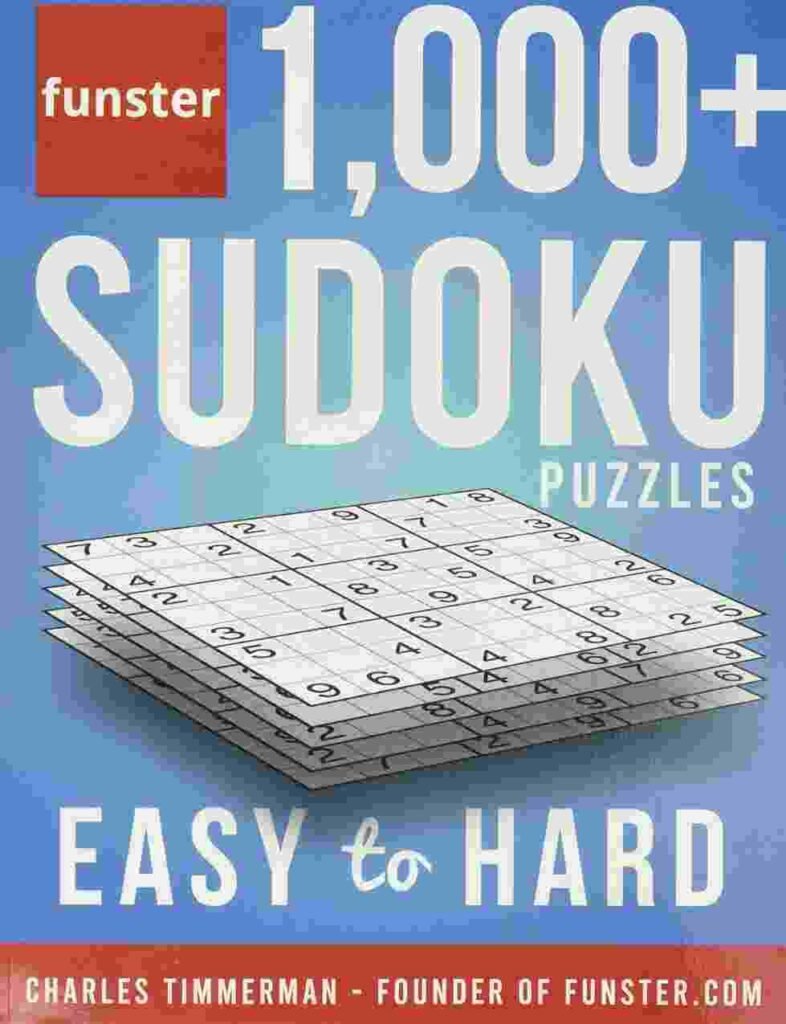
If the brief is “keep me busy for months for about $10,” these win.
Timmerman’s Funster books show up on “best of” lists because they deliver volume with a sane easy-to-hard mix. They are not strategy manuals and they are not Nikoli. They are the grocery-store workhorse that people actually finish.
Get this if: you solve most days and burn through books.
Skip if: you care about handcrafted symmetry and elegant solution paths.
6. Big Book of Sudoku — Parragon (Brain Busters)
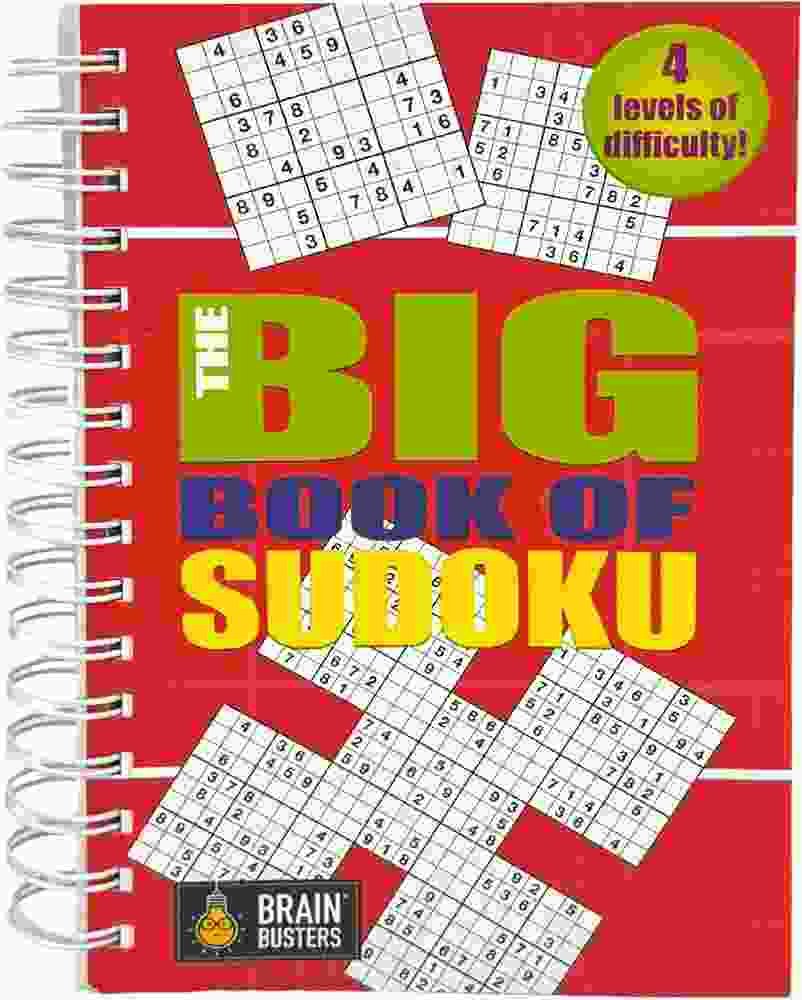
This is one of the books that keeps showing up in Amazon’s Sudoku bestseller neighborhood: 500+ puzzles, easy to hard, spiral-bound, two puzzles per page, solutions included.
Spiral binding is an underrated feature. A paperback that will not stay open is a bad solving tool.
Get this if: you want one book the whole family can share.
Skip if: you need extra-large single-page grids.
Best books to get better, not just busier
7. Mensa Guide to Solving Sudoku — Peter Gordon and Frank Longo

Most “Sudoku books” are piles of puzzles with two pages of rules. This one is a course.
Gordon walks through hidden pairs, naked pairs, X-Wings, jellyfish, coloring, chains, and the Gordonian rectangle / polygon ideas you will not see in a beginner paperback. Then you practice.
It is the right purchase after Dummies or Shortz Easy, and before you waste money on a book labeled “extreme” that you cannot start.
Get this if: medium puzzles feel easy and hard puzzles feel like guessing.
Skip if: you only want light puzzles with coffee.
Hardest Sudoku books worth buying
8. Genius-Level Sudoku — Nikoli Publishing
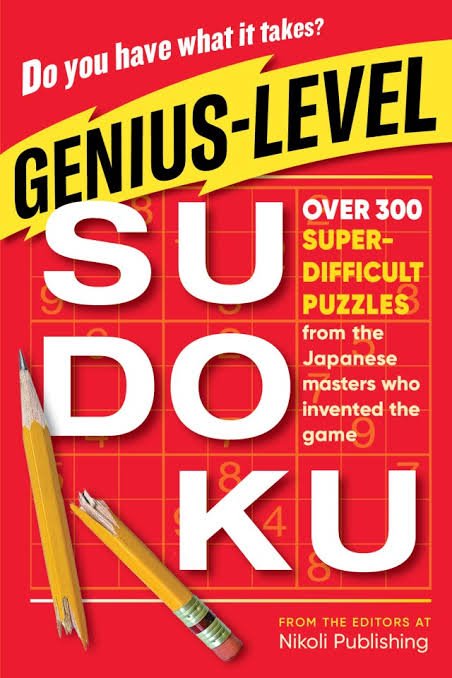
Nikoli popularized modern Sudoku. Their English collections from Workman are still the quality benchmark: handcrafted grids, ranked from expert through “ultimate,” with the kind of symmetry computer dumps rarely bother with.
Genius-Level Sudoku has 300+ hard puzzles in a compact paperback. Reviewers split the usual way: some call it perfectly hard, some say a few puzzles lean on thin clueing. That is normal at this level.
Get this if: you want the “Japanese masters” experience without hunting imports.
Skip if: you still need a technique guide open beside you.
9. Beyond Black Belt Sudoku — Frank Longo

The subtitle is the warning: If you have to ask, it’s too hard for you.
Longo’s Martial Arts series is one of the few lines where “hard” means you will use wings, fish patterns, and coloring. Way Beyond Black Belt Sudoku goes further. These are not good gifts for a casual solver. They are excellent if you already clear newspaper hard puzzles and want resistance training.
Get this if: other “extreme” books felt oversold.
Skip if: you want a relaxing evening puzzle.
10. Will Shortz hard collections (Huge Book of Hard Sudoku, Ferocious, Hard Sudoku volumes)
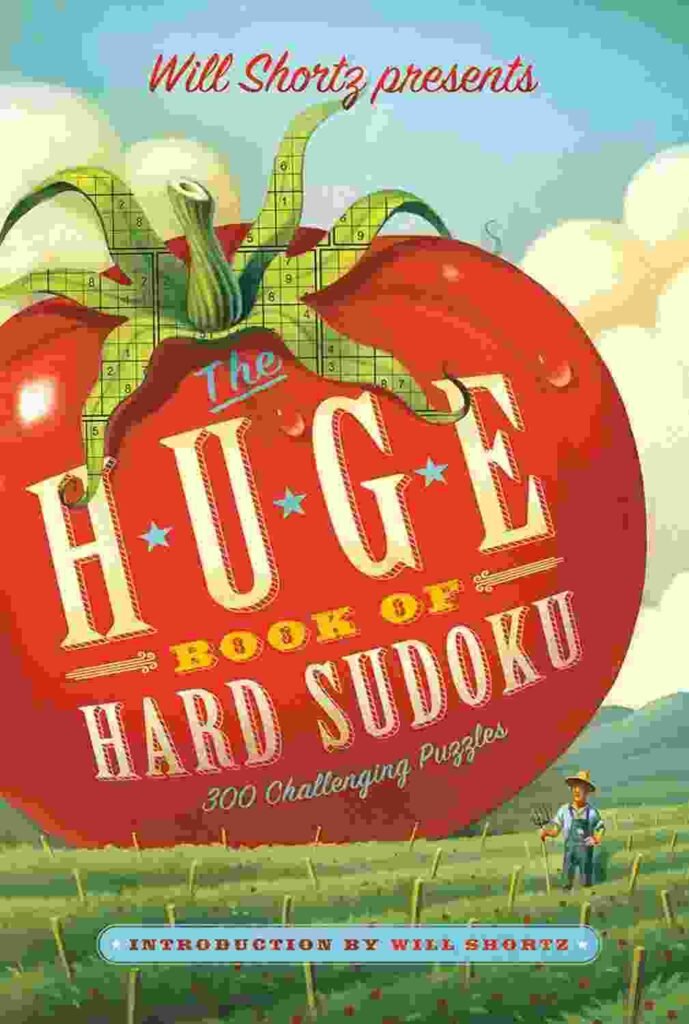
If you want hard puzzles in a format you can toss in a bag, Shortz hard books are the reliable middle of the expert market.
You will not get Nikoli’s handcrafted reputation in every grid. You will get 200–300 consistently challenging puzzles, decent production, and a brand that has been editing this category for 20 years.
Get this if: you want a hard book you can reorder when you finish it.
Skip if: you want teaching, variants, or extra-large print.
Which book should you buy first?
- Never finished a puzzle: Sudoku for Dummies or Shortz Easy.
- Can do easy, stuck on medium: Snyder’s Art of Sudoku or the Mensa Guide.
- Buying for a parent or grandparent: large print, one puzzle per page, easy-to-medium only.
- Solve daily and want value: 500–1,000 mixed puzzles with spiral binding.
- Already use X-Wings: Nikoli Genius-Level or Longo Beyond Black Belt.
Do not buy a 1,000-puzzle “hard to extreme” book as a first gift. That is how Sudoku books end up in a drawer.
Unlocking Sudoku Benefits: Science Says Solve Daily
Beyond fun, these books deliver. A 2025 UCSF study links Sudoku to 25% better short-term memory. For stress? Oxford research shows 15-minute sessions rival meditation. Beginners gain confidence; experts sharpen edges for careers in coding or strategy.
Tailor to life: Large print Sudoku books for eye comfort, travel minis for flights. Trends? Eco-editions rise 40%, per Nielsen.
| Benefit | How Sudoku Helps | Book Tie-In Example |
|---|---|---|
| Cognitive Boost | Enhances pattern recognition | Taking Sudoku Seriously’s math dives |
| Stress Relief | Promotes mindfulness | Easy to Hard Vol. 1’s zen prompts |
| Social Bonding | Family solve nights | Mastery’s all-levels grids |
| Skill Transfer | Improves problem-solving | Mensa Guide’s techniques |
Harness these for holistic wins.
Pro Tips That Make a Sudoku Book Last Longer
A good book dies two ways: you rush it, or the format fights you. Use the book like a tool, not a streak counter.
Build a small daily block. Ten to twenty minutes is enough. One finished easy puzzle beats three abandoned hard ones. If you only have a commute, pick a book with two grids per page, not six postage stamps.
Mark candidates in pencil, ink the final digit. Colored pencils help some people; they slow others down. A single 2H or mechanical pencil plus a good eraser is enough. If the paper pills after one erase, the book is a bad solving surface no matter how many puzzles it claims.
Do not guess to “keep moving.” If you are inserting a 50/50 and hoping, you are no longer practicing logic. Walk away for five minutes. Most “stuck” grids are a missed hidden single or a pair you did not write down.
Match the book to the hour. Easy and large-print books are for evenings and shared tables. Technique books (Mensa Guide, Snyder) are for a desk and a quiet half hour. Nikoli and Longo hard collections are not wind-down puzzles.
Use an app as a coach, not a crutch. Scan or rebuild a grid in an app only after you have tried the paper version. Hints teach more if you first write the candidates yourself.
Keep a one-line log. Date, book, puzzle number, time, and the technique that unlocked it. You will see progress faster than you feel it. That log also stops you from buying another 1,000-puzzle “extreme” book when you still need pairs practice.
Common traps
- Buying hard before you can finish medium without notes
- Cramped “large print” that is only a bigger page of tiny cells
- Looking at the solution page after two minutes
- Mixing Killer, Samurai, and classic Sudoku in the same week before classic is automatic
If you want a weekly rhythm: classic puzzles on weekdays, one variant weekend if you enjoy it, one technique review on Sunday. That is plenty.
What Is Actually Changing in Sudoku Books in 2026
Skip the hologram predictions. The market you are buying from right now looks like this.
Large print is the real growth lane. Seniors and anyone who pencil-marks want one grid per page, bold digits, and spiral or lay-flat binding. Generic “2026 Sudoku for Adults” covers are everywhere. Format beats the year on the title.
KDP volume books dominate search, quality books still win loyalty. A $8 book with 1,000 computer-generated puzzles sells. People who stick with Sudoku come back for Shortz, Nikoli, Longo, and Snyder because difficulty labels mean something.
Variants stay niche on paper. Killer, thermo, diagonal, and Samurai show up in collections, but classic 9×9 is still what most buyers finish. Do not buy a variant book as a first gift.
Wellness language is marketing, not a study result. Puzzles can feel calming because they demand focus. That is not the same as a guaranteed 20% drop in anxiety. Sell the hobby honestly: attention practice, not a medical device.
Apps did not kill paper. They made people pickier about paper. If a book is hard to hold open, glare-heavy, or printed through to the solution, solvers go back to their phone.
What is not arriving in 2026 as a standard feature: AR overlays, mood-tracking appendices, or “quantum Sudoku” chapters. If a page promises those, treat it as filler.
The books that will still matter next year are the same ones that matter now: a clear beginner guide, a readable daily book, a real technique manual, and one honest hard collection.
FAQs On Top 10 Sudoku Books
Q.1: What is the best Sudoku book for beginners?
Ans: Sudoku for Dummies by Andrew Heron and Edmund James if you want rules and early techniques in one place. A Will Shortz Easy collection if you already know the rules and just need finishable grids.
Q.2: What is the best large print Sudoku book?
Ans: Choose the physical book, not the brand name. Look for one puzzle per page, thick digits, room for candidate marks, and spiral or lay-flat binding. Brain Games and Chartwell-style editions are the easy store-bought version of that.
Q.3: What Sudoku book is actually hard?
Ans: Nikoli’s Genius-Level Sudoku and Frank Longo’s Beyond Black Belt / Way Beyond Black Belt books. If the cover only says “extreme 2025” or “unbreakable minds,” check a sample page before you buy.
Q.4: How many puzzles should a good book have?
Ans: 80–150 is enough for a strategy book. 200–300 is a normal practice book. 500–1,000 is for daily solvers who already know the rules. Puzzle count is not quality.
Q.5: Should intermediates buy the Mensa guide or another 300 hard puzzles?
Ans: Buy Peter Gordon and Frank Longo’s Mensa Guide to Solving Sudoku first if medium puzzles feel easy and hard puzzles feel like guessing. A pile of hard grids without the technique names will just teach you to stall.
Q.6: Is Taking Sudoku Seriously a puzzle book?
Ans: It is a math-and-history book with puzzles inside, not a daily solver. Get it if you like Latin squares and why Sudoku is hard for computers. Get Shortz or Nikoli if you want to fill grids.
Q.7: Are 2025 or 2026 “updated editions” better?
Ans: Usually no. For Dummies, Mensa, Nikoli, and Longo, the useful edition is the one that is in print and readable. A new year on a KDP cover does not mean better puzzles.
Q.8: Do Sudoku books improve memory or cut anxiety by a set percent?
Ans: No reliable number belongs in a buying guide. Daily solving is focused downtime. That can help some people feel sharper or calmer. It is not a measured 25% memory boost.
Q.9: Books or apps?
Ans: Use paper to learn and to focus. Use an app for unlimited extra grids and a hint when you are truly stuck. If you only use hints, you will not get better.
Q.10: What should I buy as a gift?
Ans: Easy-to-medium, large print, solutions in the back. Do not gift Longo or Nikoli genius-level books unless you know the person already finishes hard newspaper puzzles.
Q.11: What is a sensible first library?
Ans: One beginner or easy book, one mixed 500+ value book, then either a technique guide or a large-print book. Add a hard collection last.
Start With One Book, Not Ten
You do not need the whole list.
If you are new, get Sudoku for Dummies or Shortz Easy. If the print in most books is too small, get a one-puzzle-per-page large-print edition. If you already solve on your phone and want a better ceiling, get the Mensa Guide, then Nikoli or Longo.
Pencil, eraser, one grid a day. That is the whole method. The right book is the one you will still open next week.

M K Singh is a Sudoku enthusiast and content contributor at Sudoku Times. With over 14 years of experience in a government institution, he brings a disciplined and analytical mindset to problem-solving. A dedicated Sudoku lover for more than 17 years, he enjoys tackling puzzles of all difficulty levels and exploring advanced techniques. Through his writing, M K aims to share practical tips, strategies and insights that help fellow enthusiasts improve their skills and enjoy the game even more.
Pingback: Ultimate Guide to Sudoku Puzzles for Adults in 2025: Mastering Challenges, Boosting Brain Health and Exploring Trends - Sudoku Times