

People with ADHD often struggle with focus, sustained attention, and mental organization—skills that traditional learning or productivity tools don’t always improve. This has led many to ask a practical question:
Can Sudoku help with ADHD?
While Sudoku is not a medical treatment, research-backed brain science and cognitive theory suggest that Sudoku can support attention, working memory, and self-regulation, which are commonly affected in ADHD. In this article, we’ll explore how Sudoku interacts with the ADHD brain, what benefits are realistic, and how to use it effectively as a brain-training tool.
Understanding ADHD and the Brain

ADHD (Attention-Deficit/Hyperactivity Disorder) is associated with differences in how certain brain networks function—especially those responsible for:
- Sustained attention
- Impulse control
- Working memory
- Task switching
These functions are largely managed by the prefrontal cortex, which helps regulate focus and decision-making. Many people with ADHD experience understimulation in this area, making it hard to stay engaged with repetitive or low-reward tasks.
This is where structured puzzles like Sudoku may help.
How Sudoku Engages the ADHD Brain
Sudoku isn’t just a number game—it activates multiple cognitive systems at once.
1. Sustained Attention (Without Boredom)
Sudoku requires continuous focus, but unlike long reading or lectures, it provides constant micro-feedback:
- Correct placements feel rewarding
- Mistakes are immediately noticeable
- Progress is visible
This makes it easier for ADHD brains to remain engaged.
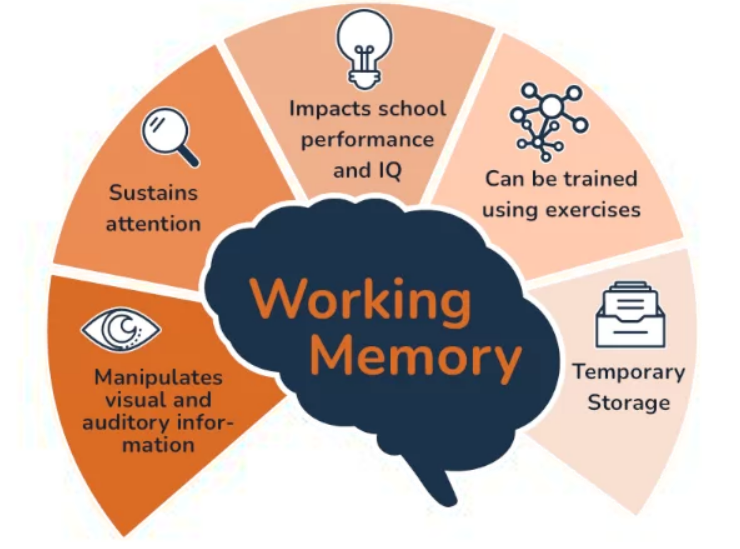
2. Working Memory Training
To solve Sudoku, you must:
- Hold several possible numbers in mind
- Compare rows, columns, and boxes
- Update information continuously
This directly exercises working memory, a core challenge for many with ADHD.
3. Reduced Cognitive Overload
Sudoku has:
- Clear rules
- A defined goal
- No distractions
For people with ADHD, this structured environment can feel calming compared to open-ended tasks.
Can Sudoku Improve Focus in ADHD?
Short answer: It can help train focus—but it is not a cure for ADHD.
Sudoku works best as a cognitive exercise that strengthens specific attention-related skills rather than as a solution that fixes attention in all situations. Visit- Cognitive Benefits of Sudoku: Cuts Dementia Risk 27 %
How Sudoku Trains Focus in ADHD
Sudoku improves focus by repeatedly engaging the brain in structured, goal-oriented attention. Each puzzle requires the solver to concentrate on one grid, one rule set, and one objective at a time. For individuals with ADHD—whose attention often shifts rapidly—this repeated practice can help build better focus control.
Sudoku may improve the following attention-related skills:
1. Task Persistence
People with ADHD often struggle to stay with a task once the initial interest fades. Sudoku encourages task persistence because:
- The puzzle has a clear end goal
- Progress is visible with each correct placement
- Small successes keep motivation alive
Over time, this can help the brain tolerate longer periods of focused effort without disengaging immediately.
2. Selective Attention
Selective attention is the ability to ignore irrelevant information and focus only on what matters. Sudoku constantly challenges this skill:
- You must ignore numbers that look correct but break a rule
- You filter out distractions and focus only on valid possibilities
This repeated filtering helps train the brain to resist impulsive or irrelevant choices, a common difficulty in ADHD.
3. Mental Endurance
Sudoku also supports mental endurance, which is the ability to maintain focus without feeling overwhelmed or mentally exhausted too quickly. Because Sudoku:
- Has no time pressure
- Uses consistent rules
- Avoids sensory overload
It allows the ADHD brain to practice sustained attention in a low-stress environment.
Why the Benefits Are Task-Specific

It’s important to understand that Sudoku does not automatically transfer focus improvements to every area of life. This is because attention training is often context-dependent.
Improved focus during Sudoku does not instantly mean:
- Better focus in meetings
- Better academic concentration
- Better productivity at work
However, what Sudoku does strengthen are the underlying cognitive muscles—such as working memory and attention regulation—that support focus across tasks.
Think of Sudoku as a Focus Gym
A helpful analogy is to think of Sudoku like a gym workout for attention:
- Going to the gym doesn’t make you instantly fit
- But consistent training strengthens muscles over time
Similarly:
- Sudoku doesn’t replace ADHD treatment
- But regular practice can help strengthen focus-related brain functions
When combined with other strategies—such as routines, behavioral techniques, or professional support—Sudoku can be a valuable and enjoyable tool for focus training.
Key Takeaway
Sudoku can help people with ADHD practice focus in a structured, rewarding way, but its benefits are gradual and specific. Used consistently and intentionally, it supports better attention control without pressure or overstimulation.
Why Sudoku Works Better Than Some Other Brain Games
Many “brain games” rely on speed, flashing visuals, or multitasking—often overwhelming for ADHD users.
Sudoku is different because it:
- Is slow-paced
- Rewards logical thinking over speed
- Encourages deep focus, not reaction time
This makes it particularly suitable for adults and teens with inattentive or combined-type ADHD.
Sudoku, Dopamine, and Motivation
ADHD is closely linked to dopamine regulation. Tasks that feel unrewarding are harder to sustain.
Sudoku helps by offering:
- Small wins (each correct placement)
- A clear sense of progress
- Completion satisfaction
These elements provide gentle dopamine reinforcement, which can make focus feel less exhausting.
Best Way to Use Sudoku for ADHD Brain Training
To get benefits without frustration, structure matters.
✅ Choose the Right Difficulty
- Start easy or medium
- Avoid jumping into expert-level puzzles too early
⏱ Keep Sessions Short
- 10–20 minutes is ideal
- Stop before mental fatigue sets in
🕰 Make It Routine-Based
- Same time each day (morning or early afternoon works best for many)
- Consistency matters more than duration
📵 Minimize Distractions
- Paper Sudoku or distraction-free apps work best
- Avoid multitasking
Sudoku for Kids vs Adults With ADHD
- Kids benefit from improved rule-following and patience, but puzzles should be age-appropriate.
- Adults often see better results in stress reduction, focus control, and mental clarity.
Sudoku tends to work best as a supplement, not a replacement, for other ADHD supports.
Limitations: What Sudoku Cannot Do
It’s important to be realistic.
Sudoku:
- ❌ Does not treat ADHD
- ❌ Does not replace therapy or medication
- ❌ Does not automatically improve academic or work performance
But it can be a low-cost, low-risk tool to support cognitive skills related to attention.
Final Verdict: Can Sudoku Help With ADHD?
Yes—within limits.
Sudoku can:
- Support focus and attention
- Train working memory
- Provide structured mental stimulation
It works best when used intentionally, in short sessions, as part of a broader ADHD management approach.
For many people, Sudoku isn’t just a puzzle—it’s a quiet, focused space where the mind can practice attention without pressure.
FAQs On Can Sudoku Help With ADHD
Q.1 – Can Sudoku help improve focus in people with ADHD?
Ans- Yes, Sudoku can help improve focus in people with ADHD by encouraging sustained attention on a single task with clear rules and goals. The structured nature of the puzzle reduces distractions and trains the brain to stay engaged for longer periods.
Q.2 – Is Sudoku good for ADHD adults?
Ans- Sudoku can be beneficial for adults with ADHD because it strengthens concentration, logical thinking, and working memory without overwhelming the brain. Short daily sessions often help improve mental clarity and task persistence.
Q.3 – Can Sudoku increase attention span in ADHD?
Ans- Sudoku may help increase attention span in ADHD by practicing prolonged focus in a controlled and rewarding environment. While it does not cure ADHD, it can support better attention control over time.
Q.4 – How often should someone with ADHD play Sudoku?
Ans- People with ADHD should play Sudoku for 10–20 minutes per day, 4–5 times a week. This duration is long enough to train focus without causing mental fatigue or frustration.
Q.5 – Is Sudoku a form of brain training for ADHD?
Ans- Yes, Sudoku can be considered a form of brain training for ADHD because it exercises working memory, attention regulation, and logical reasoning, which are commonly affected in ADHD.
Q.6 – Can Sudoku help calm an ADHD brain?
Ans- Sudoku can help calm an ADHD brain by providing structured mental stimulation and reducing cognitive overload. Many people find it soothing because it limits distractions and focuses the mind on one clear task.
Q.7 – Is Sudoku better than video games for ADHD focus?
Ans- Sudoku may be better than video games for improving focus in ADHD because it promotes deep concentration rather than fast reactions and constant stimulation, which can overstimulate the ADHD brain.
Q.8 – Can children with ADHD benefit from playing Sudoku?
Ans- Children with ADHD can benefit from age-appropriate Sudoku puzzles as they help improve rule-following, patience, and attention. Simpler grids are recommended for younger players.
Q.9 – Does Sudoku improve working memory in ADHD?
Ans- Sudoku can help improve working memory in ADHD by requiring players to hold and manipulate multiple pieces of information at once, such as possible number placements and logical patterns.
Q.10 – Can Sudoku replace ADHD medication or therapy?
Ans- No, Sudoku cannot replace ADHD medication or therapy. It should be used only as a supportive cognitive exercise alongside professional treatment and other management strategies.
Q.11 – What level of Sudoku is best for ADHD beginners?
Ans- Easy to medium Sudoku levels are best for ADHD beginners because they provide enough challenge to stay engaged without causing frustration or mental overload.
Q.12 – Does playing Sudoku daily help with ADHD symptoms?
Ans- Playing Sudoku daily may help manage certain ADHD-related challenges such as focus and mental restlessness, but results vary and benefits are usually gradual rather than immediate.

M K Singh is a contributing writer at Sudoku Times, where he shares his expertise in logic puzzles, problem-solving, and analytical thinking. With a strong background in mathematics and a lifelong passion for puzzles, M K Singh focuses on helping readers develop sharper reasoning skills through engaging Sudoku challenges and practical strategies.
Pingback: Does Sudoku Improve Working Memory? What Neuroscience Actually Says - Sudoku Times