


Does Sudoku increase IQ? Explore the science: it boosts logical reasoning, memory, & focus but won’t raise overall intelligence. Evidence-based benefits & myths debunked.
In a world obsessed with brain hacks and mental fitness apps, Sudoku stands out as a timeless puzzle that promises to sharpen your mind. But does it really boost your IQ, making you “smarter” overall, or is its magic limited to enhancing logical reasoning? This question has puzzled enthusiasts and skeptics alike, with claims ranging from IQ gains to mere skill-specific improvements. Drawing from scientific studies and expert insights, this comprehensive guide explores the evidence, debunks myths, and reveals what Sudoku truly does for your brain.
Whether you’re a daily puzzle solver or a curious beginner, understanding Sudoku’s impact can help you decide if it’s worth your time. We’ll dive into definitions, research findings, practical benefits, and tips to maximize gains—all while keeping things engaging with visuals and data tables. By the end, you’ll have a clear answer to whether Sudoku elevates your intelligence quotient or simply hones your deductive prowess.
What is IQ? A Quick Primer on Intelligence Measurement
IQ, or Intelligence Quotient, is a score derived from standardized tests designed to measure human intelligence. Developed in the early 20th century, IQ assesses abilities like problem-solving, memory, spatial reasoning, and verbal comprehension. An average IQ is around 100, with scores above 130 indicating high intelligence.
However, IQ isn’t the full picture of smarts—it’s more about fluid intelligence (adapting to new problems) and crystallized intelligence (knowledge from experience). Critics argue IQ tests are culturally biased and don’t capture creativity or emotional intelligence.
Logical reasoning, a subset of cognitive skills, involves deducing conclusions from premises using rules and patterns. It’s crucial for math, science, and everyday decisions but doesn’t encompass all IQ facets.
To illustrate the difference:
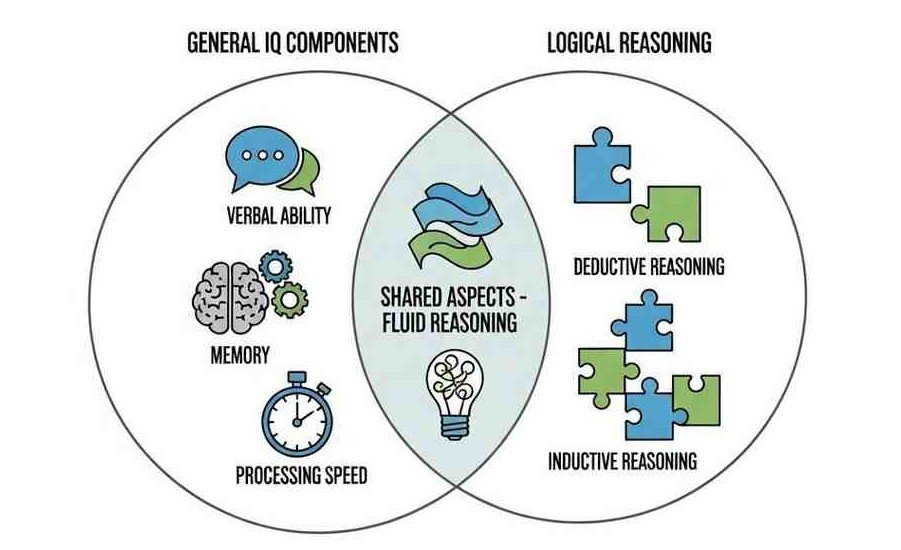
This infographic breaks down IQ components versus standalone logical reasoning, showing overlap but distinct scopes.
Understanding Sudoku: The Puzzle Phenomenon
Sudoku is a 9×9 grid puzzle where you fill cells with numbers 1-9, ensuring no repeats in any row, column, or 3×3 subgrid. No arithmetic is involved—it’s pure logic and elimination. Originating from Swiss mathematician Leonhard Euler’s Latin squares in the 18th century, modern Sudoku exploded in popularity in the 2000s via newspapers and apps.
Why the appeal? It’s accessible yet challenging, with levels from beginner to expert. Solving requires scanning, hypothesizing, and verifying—mirroring real-world problem-solving.
Here’s a standard Sudoku grid for reference:
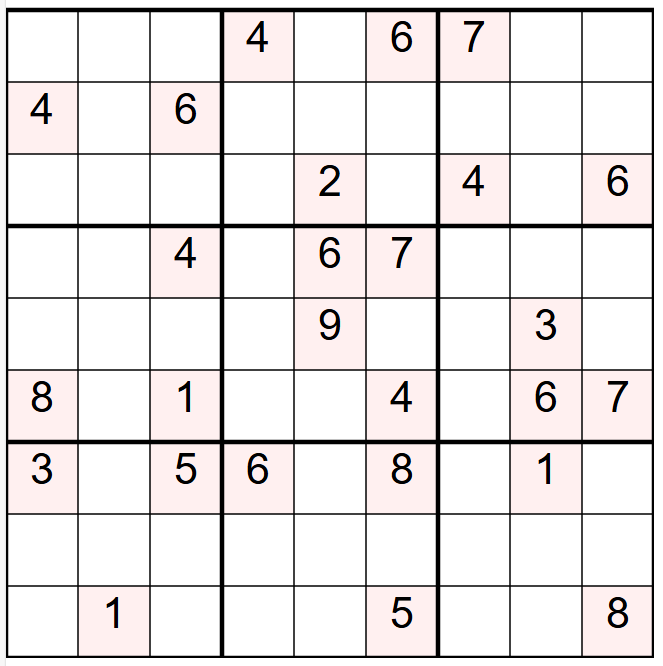
As you can see, pre-filled clues guide logical deductions, training your brain without guesswork.
Does Sudoku Actually Increase IQ? The Science Says…
The big question: Can Sudoku raise your IQ score? Most rigorous studies suggest no—it doesn’t broadly elevate general intelligence. A comprehensive review of brain-training games, including puzzles like Sudoku, found no evidence of “far transfer” to unrelated cognitive domains or overall IQ. Far transfer means skills gained from one activity (e.g., Sudoku logic) improving distant abilities like verbal IQ or creativity.
A landmark PNAS study on brain games showed placebo groups believing in IQ boosts performed better than trained groups, highlighting expectation effects over actual gains. Similarly, a 2017 analysis of decades of research concluded puzzles don’t enhance general intelligence.
One small study on university students found a weak correlation between Sudoku skill and IQ, but it was too minor to imply causation. Experts like those at UW Medicine emphasize that while enjoyable, Sudoku lacks proof for preventing cognitive decline or boosting IQ.
However, some optimistic claims exist. A Technology Org article suggested regular play increases IQ via cognitive enhancement, citing PNAS hypotheses. But these are often overstated—meta-analyses debunk broad IQ uplifts.
In short, Sudoku tunes specific mental tools but won’t turn you into a genius overnight.
How Sudoku Boosts Logical Reasoning: Proven Benefits
While IQ claims fall flat, Sudoku excels at sharpening logical reasoning. It demands deductive thinking: eliminating impossibilities to find certainties. fNIRS studies show Sudoku activates the prefrontal cortex (PFC), key for logic and decision-making.
Research on older adults linked Sudoku performance to better working memory and reasoning. A Thai study found two Sudoku variants improved students’ logical thinking via pattern recognition and deduction.
Sudoku fosters “near transfer”: gains in similar tasks like puzzles or structured problems. It enhances pattern spotting, hypothesis testing, and systematic elimination—core logical skills.
Visualize the brain at work:
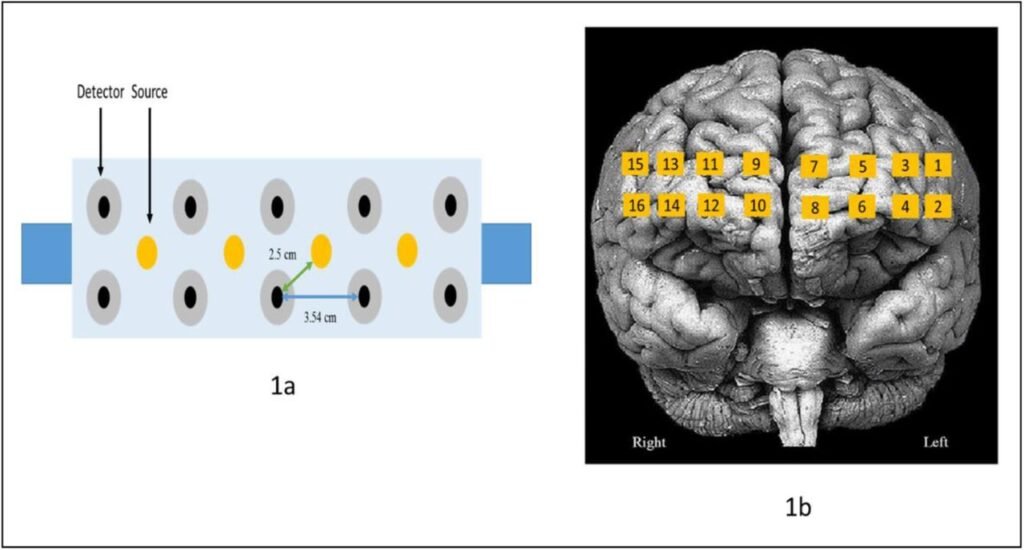
This fNIRS diagram shows PFC activation during Sudoku, underscoring logical reasoning boosts.
Beyond Logic: Other Cognitive Perks of Sudoku
Sudoku’s benefits extend to memory, focus, and more:
- Working Memory: Holding possibilities in mind improves short-term recall.
- Attention Span: Sustained grid scanning builds concentration.
- Problem-Solving: Strategic planning aids real-life decisions.
- Mental Agility: Variety in puzzles prevents cognitive ruts.
A UAlbany study explores Sudoku’s attention benefits, noting anecdotal focus improvements.
Here’s a table comparing Sudoku’s impacts:
| Aspect | IQ Impact | Logical Reasoning Impact | Supporting Evidence |
|---|---|---|---|
| General Intelligence | Minimal/No Far Transfer | High Near Transfer | Meta-analyses show no broad gains |
| Working Memory | Indirect Support | Strong Correlation | Studies on older adults |
| Attention | Potential but Limited | Enhances Focus | UAlbany research |
| Problem-Solving | No Overall IQ Boost | Deductive Skills Sharpened | fNIRS PFC activation |
This table highlights targeted benefits over blanket IQ claims.
For a broader view:
| Brain Health Perk | Sudoku Mechanism | Logical Enhancement | Real-World Application |
|---|---|---|---|
| Boosted Concentration | Scanning the grid for specific numbers without losing track of the row/column context. | Selective Attention: The ability to filter out irrelevant data (other numbers) to focus on a specific variable. | Staying focused on a single task in a noisy office environment. |
| Enhanced Memory | Temporarily memorizing “candidate” numbers for specific cells (e.g., “This box can only be a 4 or a 7”). | Working Memory Capacity: Strengthening the brain’s “scratchpad” used for holding information while processing it. | Remembering a phone number or a short grocery list without writing it down. |
| Deductive Reasoning | Determining that if a ‘5’ is in Row A, it cannot be in the rest of Row A or the corresponding 3×3 box. | Logical Implication (If-Then Logic): Assessing validity based on strict rules and elimination. | Troubleshooting technical issues by eliminating impossible causes first. |
| Neuroplasticity Support | Encountering new patterns or advanced techniques (like “X-Wing” or “Swordfish”). | Cognitive Flexibility: Rewiring neural pathways to adapt to new rules or complex pattern recognition. | Learning a new software tool or adapting to a change in daily routine. |
| Decision Making Speed | Rapidly identifying the only possible location for a number in a specific sector. | Processing Speed: Reducing the time it takes to perceive information and execute a logical response. | Making quick, accurate decisions while driving or playing sports. |
| Stress Reduction | Focusing entirely on the puzzle, creating a “flow state” that blocks out external stressors. | Cognitive Control: Regulating emotional responses by engaging the prefrontal cortex in structured tasks. | Managing anxiety by grounding oneself in a structured, solvable problem. |
| Detail Orientation | Noticing that a single number placement creates a conflict in a distant part of the grid. | Pattern Recognition: Identifying subtle relationships and irregularities within a complex system. | Spotting errors in financial statements or typos in a document. |
This chart outlines Sudoku’s brain health perks, aligning with logical enhancements.
Limitations and Myths: What Sudoku Can’t Do
Sudoku isn’t a panacea. It won’t prevent dementia outright or replace diverse activities like exercise or learning languages. Over-reliance on one puzzle type may lead to plateaus, as novelty drives brain growth.
Myths include “Sudoku raises IQ by 10 points”—debunked by placebo studies. Reddit discussions echo skepticism, noting intuitive lack of general benefits.
Real-Life Applications: From Classrooms to Daily Life
Sudoku’s logical, rule-based nature makes it a versatile tool far beyond casual entertainment. Teachers integrate it into lessons to cultivate deductive thinking and perseverance, while therapists use it in cognitive remediation for conditions like schizophrenia, where prefrontal cortex (PFC) functions—such as reasoning and decision-making—are often impaired. In everyday routines, it serves as a quick mental reset, stress reliever, or family bonding activity. Below, we expand on these applications with more detailed explanations, supported by real-world practices and insights from educators, researchers, and users.
In Classrooms: Building Logic, Focus and Growth Mindset

Teachers worldwide incorporate Sudoku into curricula because it naturally teaches structured problem-solving without requiring advanced math. The puzzle’s elimination-based logic mirrors real academic challenges, helping students develop analytical skills that transfer to subjects like math, science, and even reading comprehension.
- Projector-Based Group Solving for Recitation and Collaboration
One popular method involves projecting a Sudoku grid onto a whiteboard or screen for whole-class participation. The teacher guides students through filling in numbers step-by-step, encouraging verbal explanations of reasoning (“Why can’t a 5 go here?”). This turns the puzzle into an interactive recitation activity, boosting public speaking confidence and collective problem-solving. Educators note it keeps large classes (even 300+ students) engaged during lectures, as seen in experiments where Sudoku served as a quick demo of logical processes. Students learn to articulate deductions aloud, reinforcing understanding through teaching others. - Individual or Small-Group Printed Puzzles for Differentiated Learning
Teachers print varied difficulty levels (easy 4×4 grids for beginners, harder 9×9 for advanced students) and distribute them as warm-ups, transitions between lessons, or enrichment tasks. This allows personalization—struggling students build confidence with simpler versions, while high-achievers tackle experts. Activities like magnetized boards let kids physically place digits, adding a kinesthetic element that aids spatial reasoning. Research and teacher reports highlight how this fosters pattern recognition, which supports early algebra, scientific classification, or logical sequencing in other subjects. - Teaching Growth Mindset and Perseverance
Sudoku explicitly demonstrates that mistakes are part of learning—erasing wrong entries and trying again builds resilience. Educators use it to discuss “growth mindset”: initial frustration turns into triumph upon completion, teaching students that effort leads to mastery. In STEM-focused classes, it trains deductive elimination (ruling out impossibilities), mirroring scientific hypothesis testing. Many teachers report improved focus during lessons, as the sustained attention required reduces distractions and enhances overall concentration.
These classroom uses create “fun challenges” that build critical thinking, confidence, and a structured approach to problems—skills that carry into exams, projects, and lifelong learning.
In Cognitive Remediation: Supporting Mental Health Conditions Like Schizophrenia
For disorders involving prefrontal cortex dysfunction—such as schizophrenia, where executive functions (planning, reasoning, decision-making) are disrupted—Sudoku offers a low-pressure, engaging remediation tool. Functional near-infrared spectroscopy (fNIRS) studies show Sudoku activates the PFC differentially, making it promising for neurorehabilitation.
- Targeted PFC Stimulation in Neuropsychiatric Therapy
Researchers suggest Sudoku as a leisure-time cognitive activity for schizophrenia patients, who often struggle with reality-testing and logical reasoning. The puzzle’s need for sustained attention, pattern analysis, and rule application helps retrain these deficits. In clinical settings, it’s used in cognitive remediation programs to improve working memory and problem-solving without overwhelming the patient. For instance, simplified versions (e.g., 4×4 grids) start gently, progressing to full 9×9 as tolerance builds. This graded approach provides measurable “wins,” boosting motivation and self-efficacy—key for mental health recovery. - Integration into Broader Therapy Protocols
In some metacognitive therapies for schizophrenia, patients engage in Sudoku-like activities (20-minute sessions) as a control or warm-up task before deeper reflection exercises. This standardizes session timing while providing cognitive stimulation. Studies indicate such puzzles help with negative symptoms (e.g., reduced motivation) by offering a sense of accomplishment and order, countering disorganized thinking. While not a standalone cure, it complements therapies by activating brain regions tied to executive control.
Therapists emphasize Sudoku’s appeal: it’s rule-bound yet creative within constraints, giving patients a structured “win” in a world that often feels chaotic. You may also like to read- Cognitive Benefits of Sudoku: Cuts Dementia Risk by 27 %
In Daily Life: A Practical Mental Habit for Stress Relief and Routine
Beyond structured settings, Sudoku fits seamlessly into everyday routines as a quick, portable brain break.
- Morning Ritual for Calm and Focus
Many adults start their day with a newspaper or app Sudoku, treating it like a 10-15 minute “meditation.” The focused elimination process clears mental clutter, setting a positive tone. Users describe it as a simple habit that builds transferable positivity—starting small and achieving completion creates momentum for daily tasks. - Stress Reduction and Emotional Well-Being
During commutes, breaks, or evenings, Sudoku provides escapism and control. The sense of order (filling a grid neatly) counters daily stressors, reducing anxiety. For families, group solving fosters bonding—parents and kids collaborate, teaching teamwork while sharpening minds. Older adults often use it socially in clubs, combating isolation through shared accomplishment. - Illustrative Scenario: The Engaging Process in Action
Picture a busy professional winding down after work: They open a Sudoku app on their phone, starting with a medium-difficulty grid. As they scan rows and columns, eliminating impossibilities (“No 7 in this subgrid because it’s already in the row”), the mind quiets external worries. Each correct placement brings a small dopamine hit—satisfaction from logic triumphing over uncertainty. Over minutes, the grid fills methodically, mirroring how real-life problems (budgeting, planning a trip) benefit from systematic breakdown. By completion, they feel mentally refreshed, sharper for tomorrow’s challenges. This “flow state” engagement—losing track of time in focused reasoning—builds resilience and mental agility without feeling like “work.”
In essence, Sudoku bridges fun and function: classrooms gain engaged learners, therapy gains accessible remediation, and daily life gains a reliable tool for calm and clarity. Its simplicity belies profound real-world utility—try one today and see the logic unfold!
Tips to Maximize Sudoku’s Logical Benefits
- Start Easy: Build confidence with simple grids.
- Vary Types: Try symbol or killer Sudoku for fresh challenges.
- Time Sessions: 15-30 minutes daily for sustained gains.
- Combine Activities: Pair with chess for broader smarts.
- Track Progress: Note faster solves to see reasoning improvements.
A weekly plan table:
| Day | Puzzle Type | Duration | Focus |
|---|---|---|---|
| Mon | Standard | 15 min | Basics |
| Tue | Variant | 20 min | Patterns |
| Wed | Expert | 25 min | Deduction |
| Thu | Timed | 15 min | Speed |
| Fri | Review | 20 min | Errors |
| Sat | Group | 30 min | Social |
| Sun | Rest | – | Reflect |
This routine optimizes logical growth.
Conclusion: Sudoku for Reasoning, Not Revolutionizing IQ
Sudoku doesn’t increase IQ in a general sense—science points to limited transfer beyond puzzle-like tasks. But it powerfully enhances logical reasoning, memory, and focus, making it a worthwhile brain exercise. For mental agility, it’s a fun, low-cost tool, especially when varied with other activities.
Visit SudokuTimes, grab a puzzle today and strengthen your deductive edge—your brain will appreciate the workout!
FAQs On Does Sudoku Increase IQ
Q1- Does Sudoku increase IQ?
Ans- No, scientific studies, including meta-analyses, show that Sudoku does not broadly increase overall IQ or general intelligence. It primarily enhances specific skills like logical reasoning through near transfer, but lacks evidence for far transfer to unrelated cognitive areas.
Q2- Does Sudoku make you smarter?
Ans- Sudoku can make you “smarter” in targeted ways by improving logical reasoning, working memory, and problem-solving, but it doesn’t boost general intelligence or IQ. Research indicates benefits are limited to puzzle-related tasks rather than overall cognitive enhancement.
Q3- Is being good at Sudoku a sign of high IQ?
Ans- Not necessarily. While skilled Sudoku solvers may have strong logical reasoning, studies show only a weak correlation between Sudoku performance and general IQ, suggesting it’s more about practice and deductive skills than innate high intelligence.
Q4- Does Sudoku improve logical reasoning?
Ans- Yes, Sudoku strongly boosts logical reasoning by requiring deductive thinking, pattern recognition, and elimination of possibilities. Functional near-infrared spectroscopy (fNIRS) studies confirm it activates the prefrontal cortex, key for logic and decision-making.
Q5- Can Sudoku boost brain power?
Ans- Sudoku enhances specific aspects of brain power, such as attention, working memory, and mental agility, but it doesn’t lead to widespread cognitive improvements or IQ gains. It’s most effective for honing deductive and analytical skills.
Q6- Does Sudoku improve memory?
Ans- Sudoku improves working memory by forcing players to hold multiple possibilities in mind while solving grids. However, these gains are task-specific and don’t broadly enhance long-term memory or overall intelligence.
Q7- Why do smart people play Sudoku?
Ans- Smart people often enjoy Sudoku because it challenges logical thinking and provides mental stimulation. It helps maintain focus and cognitive efficiency, but research shows it’s not a direct IQ booster—rather, it’s a fun way to exercise deductive skills.
Q8- Does Sudoku prevent cognitive decline?
Ans- While Sudoku can help maintain mental acuity, especially in older adults, there’s no strong evidence it prevents dementia or broad cognitive decline. It supports logical reasoning and attention but should be paired with diverse activities for better results.
Q9- How does Sudoku affect the brain?
Ans- Sudoku activates brain regions like the prefrontal cortex, improving logical deduction, attention span, and problem-solving. Neuroimaging studies show increased activity during play, but benefits are limited to near-transfer skills rather than general IQ elevation.
Q10- Is Sudoku better than other puzzles for IQ?
Ans- Sudoku is excellent for logical reasoning but not superior for IQ gains compared to other puzzles like chess or crosswords. All brain games show similar limitations—no far transfer to general intelligence, per comprehensive reviews.
Q11- Can daily Sudoku raise IQ by 10 points?
Ans- No, claims of Sudoku raising IQ by 5-10 points are myths debunked by placebo-controlled studies. Any perceived gains are often due to expectations, not actual broad intelligence improvements.
Q12- Does Sudoku help with focus and concentration?
Ans- Yes, Sudoku enhances attention and concentration by requiring sustained grid scanning and ignoring distractions. Anecdotal and research evidence, like studies on puzzle-solving, supports improved focus, though not linked to overall IQ boosts.
Q13- What cognitive skills does Sudoku improve?
Ans- Sudoku primarily improves logical reasoning, working memory, pattern recognition, problem-solving, and mental agility. It fosters near-transfer benefits in similar tasks but doesn’t enhance unrelated areas like verbal intelligence or creativity.
Q14- Is Sudoku a good brain exercise?
Ans- Absolutely, Sudoku is an effective brain exercise for sharpening deductive thinking and cognitive efficiency. While it doesn’t increase IQ, regular play can elevate baseline function in logic-related areas, making it a worthwhile mental workout.
Q15- Does Sudoku have any limitations for brain benefits?
Ans- Yes, Sudoku’s benefits plateau with repetition and don’t transfer to general IQ or unrelated skills. Over-reliance may limit novelty-driven growth; combining it with varied activities like exercise or learning new skills yields better overall cognitive health.

SwetaMS is the founder and editor of Sudoku Times, a leading blog dedicated to Sudoku puzzles, logical reasoning, and brain training. With a deep passion for analytical thinking and problem-solving, Sweta curates engaging Sudoku challenges, expert solving techniques, and thoughtful insights for puzzle enthusiasts of all levels.