


Solve Extreme Sudoku Puzzles within 10 Minutes is entirely possible once you replace random scanning with a disciplined, timed system. Extreme Sudoku grids (usually 17–22 clues) demand advanced pattern recognition and efficient candidate management. This guide gives you exactly that system — a clear 10-minute framework, technique priority order, speed habits, and a realistic practice plan.
What Makes Extreme Sudoku So Challenging?
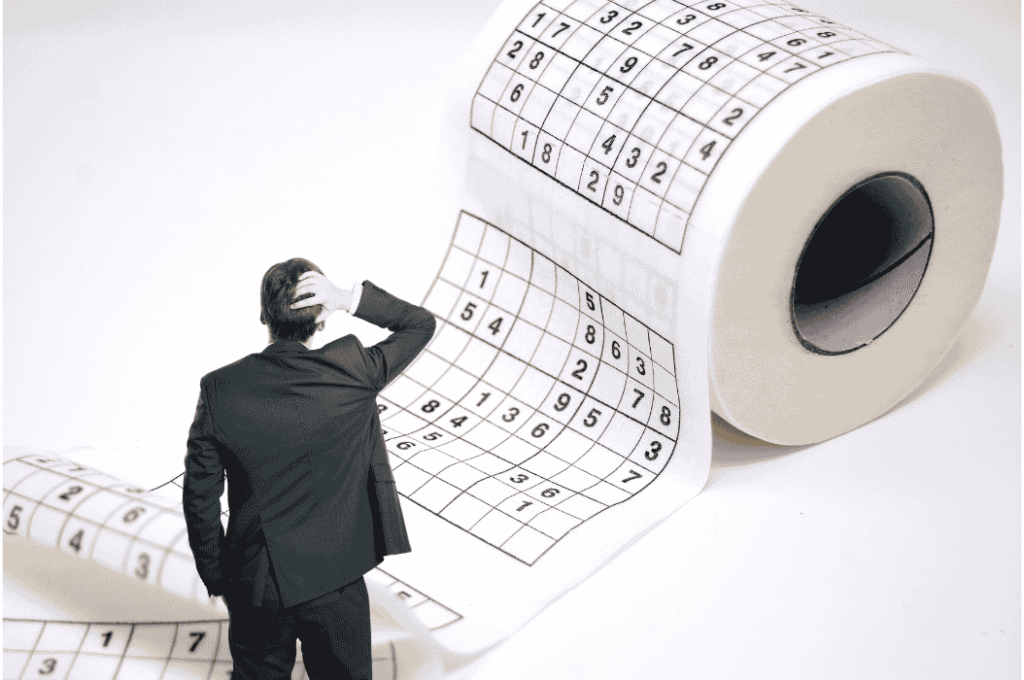
Standard Sudoku usually starts with 30+ clues and yields quickly to basic scanning. Extreme puzzles deliberately starve you of information. This creates:
- Multiple branching solution paths
- Heavy reliance on interactions across distant parts of the grid
- Frequent need for intermediate and advanced techniques (locked candidates, fish patterns, wings, and chains)
- Moments of “solver’s block” that punish unstructured approaches
Success comes from systematic elimination and pattern spotting, not guesswork.
Preparing Your Mind and Tools
- Prefer digital solvers (Sudoku.com, Andoku, HoDoKu, or similar) for auto-candidates, instant conflict highlighting, and built-in timers.
- If using paper, use a fine erasable pen and leave generous space for marks.
- Set a 10-minute timer. Treat it as training urgency, not a pass/fail test.
- Eliminate distractions and adopt a project mindset: every placement should unlock further progress.
- Use consistent candidate notation (small 1–9 marks). Some solvers add light color highlighting for chains — useful once you reach coloring techniques.
The 10-Minute Timed Strategy
Step 1: Initial Scan (≈ 1 minute)
Sweep the entire grid systematically (rows → columns → boxes).
Place every naked single you can find and note the most constrained units. Do not dig deep yet — this is pure reconnaissance.
Step 2: Efficient Pencil Marking (1–2 minutes)
Fill candidates for every empty cell, prioritizing cells and units with the fewest options.
Update marks immediately whenever you place a number. In extreme puzzles, thorough but disciplined marking is what reveals the advanced patterns later.
Step 3: Deploy Techniques in Priority Order (5–6 minutes)
Always work from simplest and highest-impact techniques to more complex ones:
- Naked & Hidden Singles
- Locked Candidates (Pointing Pairs / Claiming) and Box-Line Reduction
- Naked & Hidden Pairs, Triples (and Quads if needed)
- X-Wing
- Swordfish (and rarer Jellyfish)
- XY-Wing / XYZ-Wing and simple Coloring
- Longer Alternating Inference Chains or Unique Rectangle
- Limited bifurcation only on bivalue cells, with clear notes for backtracking
Key technique reminders
- Naked Pair/Triple: Two (or three) cells in a unit contain exactly the same two (or three) candidates → eliminate those candidates from the rest of the unit.
- Hidden Pair/Triple: Two (or three) candidates appear only in two (or three) cells of a unit → remove all other candidates from those cells.
- X-Wing: A candidate appears exactly twice in each of two rows, and those appearances share the same two columns (or vice versa). Eliminate the candidate from the rest of those two columns.
- Swordfish: The same idea extended to three rows and three columns.
- Coloring / Chains: Follow strong and weak links. A contradiction in one color or chain implication eliminates candidates cleanly.
Focus first on techniques that remove the largest number of candidates.
Step 4: Optimization & Final Checks (1–2 minutes)
Concentrate on bottleneck regions. Skip any technique that is not producing progress.
When the grid is nearly complete, verify uniqueness of each placement and scan for residual conflicts. Confirm the finished grid has no duplicates in any row, column, or box.
Technique Priority Checklist (Quick Reference)
- Singles (naked & hidden)
- Locked candidates / Box-line
- Naked & Hidden subsets
- Fish patterns (X-Wing → Swordfish)
- Wings & simple coloring
- Longer chains
- Cautious bifurcation (last resort)
Visual Patterns Matter
Extreme Sudoku is heavily visual. Train your eye to recognize the classic shapes of pairs, X-Wings, and Swordfish at a glance. When publishing or studying, include clear diagrams of each major pattern — they accelerate learning far more than text alone.
Speed Hacks, Common Pitfalls & Getting Unstuck
Speed habits
- Global scan every 60–90 seconds — new patterns appear as the grid fills.
- Candidate counting: numbers that appear as candidates in only a few places are high-value targets.
- Skip low-yield paths quickly.
- Use digital highlighting of a single digit to reveal fish patterns instantly.
Pitfalls to avoid
- Incomplete or messy candidate marks
- Jumping to fancy techniques before exhausting singles and locked candidates
- Assuming symmetry or “pretty” patterns that are not forced
- Over-marking cells that still have many possibilities when time is tight
- Forgetting to update candidates after every placement
When stuck
Re-check the last few placements and marks for errors. Step away for 30–60 seconds if frustration rises — fresh eyes often spot the missed locked candidate or X-Wing. Limited, noted bifurcation on a bivalue cell can break a deadlock, but treat it as a temporary probe, not a primary method.
Practice Routine for Mastery
Consistency beats intensity.
- Daily: 3 timed extreme puzzles + 2 focused technique drills (e.g., only fish patterns or only wings).
- Weekly: One post-mortem analysis of your slowest solve — note exactly where time was lost.
- Track: technique used, time per phase, and remaining candidates when you stalled.
- Join communities (r/sudoku and similar) for feedback and fresh extreme-rated puzzles.
- Progressively raise the bar: once 10 minutes becomes comfortable, aim for cleaner solves with fewer advanced techniques.
Recommended Resources & Tools
- Digital solvers with strong candidate handling and timers (Sudoku.com, Andoku, HoDoKu, etc.)
- Sites that publish true extreme or “diabolical” rated puzzles
- Technique trainers that isolate specific patterns
- Optional: books or sites that systematically teach fish, wings, and chains
Difficulty ratings vary across platforms — always verify you are practicing genuine extreme-level grids (typically 17–22 clues with heavy advanced-technique requirements).
FAQs On How to Solve Extreme Sudoku Puzzles within 10 Minutes
Q.1: What distinguishes extreme Sudoku from hard or standard puzzles?
Ans: Far fewer clues (often 17–22) and the necessity of intermediate-to-advanced techniques rather than basic scanning alone.
Q.2: How many given numbers do extreme puzzles usually have?
Ans: Typically 17–22. Seventeen is the theoretical minimum for a uniquely solvable Sudoku.
Q.3: Is guessing allowed?
Ans: Pure logic is preferred. Limited, carefully noted bifurcation on bivalue cells is acceptable for speed training but should not become the default method.
Q.4: Why use a digital app?
Ans: Auto-candidates, instant conflict detection, digit highlighting, and timers save significant time and reduce mechanical errors.
Q.5: How should I practice to reach sub-10-minute solves?
Ans: Follow the structured daily/weekly routine above, always timing yourself and analyzing stalls.
Q.6: What is the single most common reason solvers get stuck on extremes?
Ans: Incomplete candidate marking or skipping locked candidates and basic subsets before hunting complex patterns.
The Joy of Mastery
Solving an extreme Sudoku cleanly in under 10 minutes is deeply satisfying. It is not about innate brilliance — it is about building a reliable process, training your pattern recognition, and staying calm under mild time pressure.
Take one extreme puzzle right now. Set a 10-minute timer. Apply the four steps and the priority checklist. Note exactly where you hesitate. That point of hesitation is your next practice target.
Keep solving. Every grid makes the next one faster..

Sweta MS is the founder and editor of Sudoku Times. A passionate Sudoku enthusiast and logic puzzle solver for over 12 years, she has solved thousands of puzzles ranging from easy to expert level. Sweta specializes in breaking down advanced solving techniques (X-Wing, Swordfish, XY-Wing and more) into clear, practical guides that help beginners and intermediate players improve faster. Through Sudoku Times, she shares daily puzzles, strategy tutorials and insights into how Sudoku trains the brain. Her goal is to make high-quality Sudoku content accessible, enjoyable and effective for players of all skill levels.
Pingback: Top 10 Sudoku Books to Try in 2025: Sharpen Your Mind with the Best Puzzle Collections